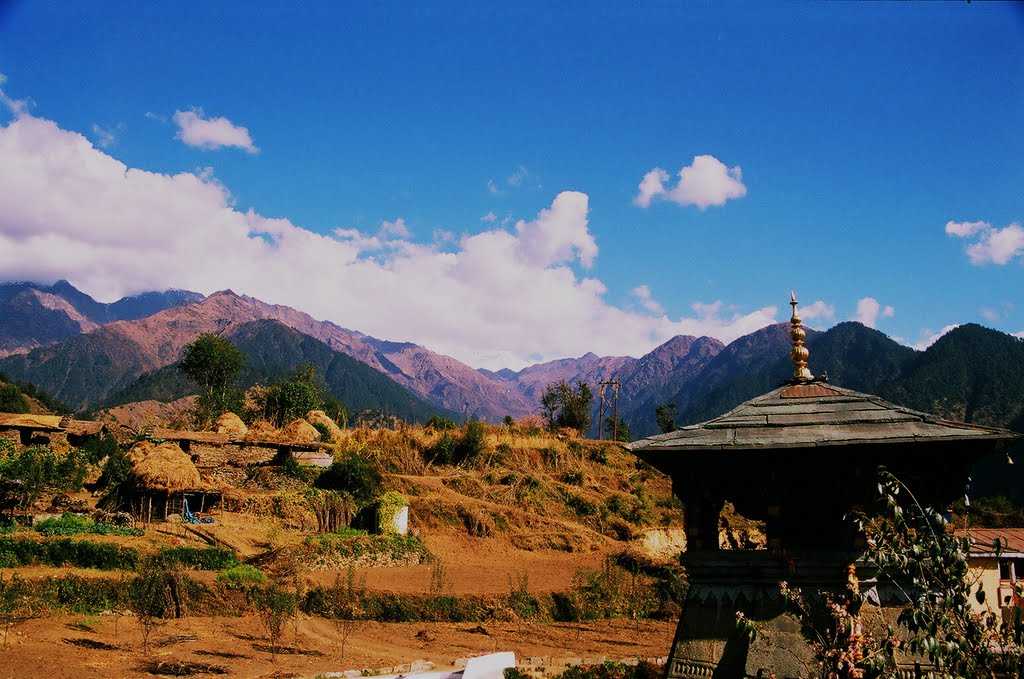
Triyuginarayan Temple
About Triyuginarayan Temple
Far From City: 39 kms from city center
Cost:
About Triyuginarayan Temple
Weather:
Time Required:1-2 hrs
Open Time:7:00 AM - 7:00 PM
Cost:No entry fee
History of Triyuginarayan Temple
As per Hindu mythology, goddess Parvati was the daughter of Himavat, who was the personification of the Himalayas. She was also the rebirth of Sati. She initially tried to lure Shiva by her beauty but failed in her attempts. Later on, she practised severe penance at the Gauri Kund, which is 5 kilometres away from Triyuginarayan. Pleased, Shiva proposed to Parvati at Guptakashi and the two married in the village of Triyuginarayan.
Vishnu acted as Parvati's brother during the marriage ceremonies, while Brahma served as the priest of the wedding. The holy fire that witnessed the matrimony continues to burn in front of the temple in a fireplace till date. Before the marriage ceremony had begun, the three gods had taken a bath in the three kunds of the temple, which are the Rudra-kund, Vishnu-kund and Brahma-kund. The Saraswati-kund, which is believed to have originated from Vishnu's navel, is the source of water supply to these three kunds.
Beliefs Associated With Triyuginarayan Temple
According to scriptures, devotees who visit the Triyuginarayan Temple consider the ashes from the burning fire in the Havan Kunda to be holy. Thus they add samidha, or sacrificial offerings of wood to the flame, collect the ashes as blessings and carry it back with them. It is also believed that these ashes promote conjugal bliss.
The water from the three kunds is also considered to cure infertility in women, and devotees are often found taking a dip in these holy waters.
Architecture of Triyuginarayan Temple
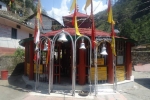
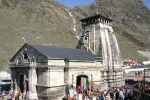
In terms of its architectural style, the Triyuginarayan temple resembles the temple of Kedarnath. The present shrine, known as the Akhand Dhuni temple, is believed to have been built by Adi Shankaracharya, who is also credited with having constructed various other temples of Uttarakhand. The shrine also consists of a 2 feet high silver image of god Vishnu, accompanied by an idol of his consort, goddess Lakshmi and goddess Saraswati. The exact location of the marriage is marked by a stone which is known as the Brahma Shila in front of the temple.
Trekking to Triyuginarayan Temple
There exist different trekking routes, that lead up to the Triyuginarayan Temple. One such trek is the path via Sonprayag on the Ghuttur-Kedarnath bridle, which passes through dense forests to reach the temple and is a journey of around five kilometres. Kedarnath is located to the south of this temple, and from here the total trekking distance up to the final destination is about 25 kilometres.
Another popular trekking route followed to reach the temple is from Mussoorie. The seven-day journey passes through Tehri, Mala, Belak, Budakedar-Ghuttu-Panwali Kanta, Triyuginarayan and Kedarnath in this particular order. To encourage tourism, the Department of Tourism of the Government of Uttarakhand has also identified and developed six significant circuits, which includes the Rudraprayag?Kedarnath circuit. This route covers the temples at Rudraprayag,Tungnath,Ukhimath,Madhyamaheshwar,Guptkashi, Triyuginarayan andKedarnath, along with the Mandakini River valley, and involves total trekking of 69 kilometres.
Triyuginarayan Temple Festivals
The festival of Navratri is celebrated with great zeal and gusto at the Triyuginarayan Temple by the local villagers. The celebrations go on for up to two weeks, and visitors can enjoy seeing the various special rituals and ceremonies that take place here during this time.
How to Reach Triyuginarayan Temple
The Triyuginarayan Temple is just 12 kilometres away from Sonprayag and is connected by a motorable road to it, which means that one can quickly reach the temple by using any means of public transport or hiring a cab.
Top Tourist Places in Rudra Prayag
Augustmuni
Chopta
Ukhimath
Khirsu
Sonprayag
Kalimath
All Tourist Places in Rudra Prayag
Comments on Triyuginarayan Temple
Post Your Comment