Sultanpur Bird Sanctuary
About Sultanpur Bird Sanctuary
Far From City: 5 kms from city center
Cost:
About Sultanpur Bird Sanctuary
Weather:
Time Required:2-3 hours
Open Time:7:00 AM - 4:30 PM (Closed on Monday)
Cost:Indians - INR 5Foreigners- INR 40Camera- INR 10Video Camera - INR 500
Species of Birds at Sultanpur Bird Sanctuary
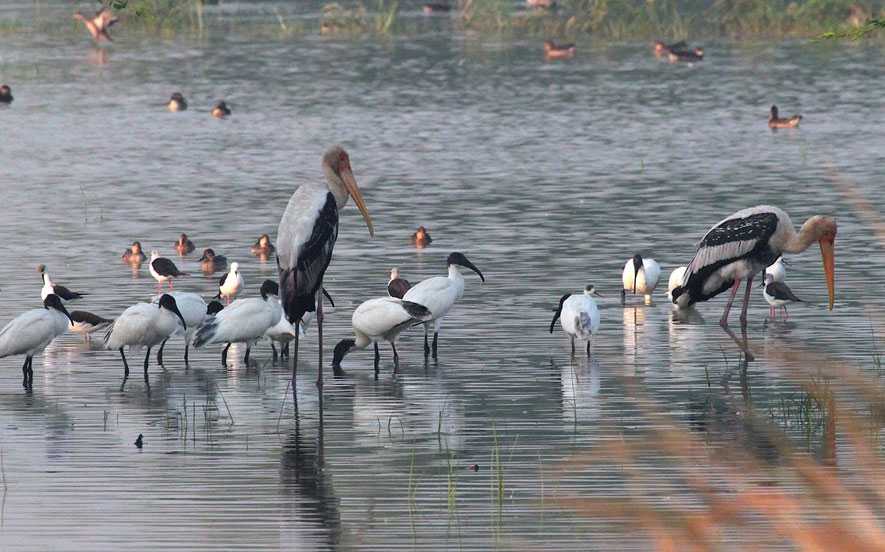
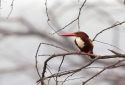
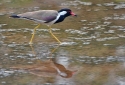
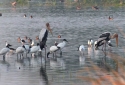
Resident birds at the Sultanpur Bird Sanctuary include the common hoopoe, paddyfield pipit, purple sunbird, little cormorant, Indian Cormorant, common spoonbill, gray francolin, black francolin, Indian roller, white-throated kingfisher, painted stork, black-necked stork, white ibis, black-headed ibis, little egret, great egret, cattle egret, crested lark, red-vented bulbul, rose-ringed parakeet, Red-wattled Lapwing, shikra, Eurasian collared dove, red-collared dove, laughing dove, spotted owlet, rock pigeon, magpie robin, greater coucal, weaver bird, bank mynah, common mynah and green bee-eater.
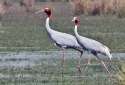
Migratory Birds include Siberian crane, greater flamingo, ruff, black-winged stilt, common teal, common greenshank, northern pintail, yellow wagtail, white wagtail, northern shoveller, rosy pelican, spot-billed pelican, gadwall, wood sandpiper, spotted sandpiper, Eurasian wigeon, black-tailed godwit, spotted redshank, starling, bluethroat and long-billed pipit. In summer about 11 species of migratory birds such as Asian Koel, black-crowned night heron, grey heron, Indian golden oriole, knob-billed duck, blue-cheeked bee-eater, blue-tailed bee-eater and cuckoos also come here.
History of Sultanpur Bird Sanctuary
Sultanpur is named after Rajput Chauhan Sultan Singh who was the great-grandson of Harsh Dev Chauhan. Sultanpur was the centre of salt production till the 19th century. In 1969 at the Conference of the International Union for Conservation of Nature and Natural resources (IUCN) in New Delhi, the potential of the Sultanpur Jheel was highlighted. It had been the main attracting force for birds, since about a century. Peter Jackson of the IUCN, along with the late Prime Minister of India, Mrs Indira Gandhi was the main force regarding this.
On April 2, 1971, the Sultanpur Jheel with an area of 1.21 sq. Kilometres was provided with the Sanctuary status under section 8 of the Punjab Wildlife Preservation Act of 1959. Further on 5th July 1991, the status of the park was upgraded to National Park under Section 35 of the Wildlife Protection Act, 1972. Simultaneously the area was increased to 1.42 sq. kilometers. The National Park comprises of the land of Sadhrana, Chandu, Sultanpur and Saidpur villages.
Sultanpur Bird Sanctuary Timing
The sanctuary is open on all days of the week, from 7:00 AM to 4:30 PM, except on Tuesday.
Best time to visit Sultanpur Bird Sanctuary
Winters serve as the ideal time to visit this sanctuary as all migratory birds flock here during the winter season. Hence, the months from October to February are the best months to visit Sultanpur Bird Sanctuary.
How to Reach Sultanpur Bird Sanctuary
Driving on your own is a feasible way to reach Sultanpur Bird Sanctuary from Delhi. You can also hire a day cab from any rent-a-car operator and drive up to Sultanpur Bird Sanctuary, which is about 50 kilometres from central Delhi. Alternatively, you can also travel by bus that is easily available in Delhi and is a comfortable mode of transportation. Since the sanctuary is located quite far from the Huda City metro station, it is not a good idea to use Metro as the mode of transport. Finding cab or auto from Huda City metro will be quite chaotic.
Top Tourist Places in Gurgaon
Cyber Hub
Damdama Lake
Sohna
Ambience Mall
Manesar
Murthal
All Tourist Places in Gurgaon
Tips
1. Bird watching is best done early in the morning. 7:00 AM is the perfect time for bird watching as migratory birds fly out of their nests at sunrise and return at sunset.2. Carry a decent pair of binoculars along with you while visiting this picturesque land full of a variety of birds.
Photos of Sultanpur Bird Sanctuary








Comments on Sultanpur Bird Sanctuary
Post Your Comment